
From noise to clarity: learning to let go
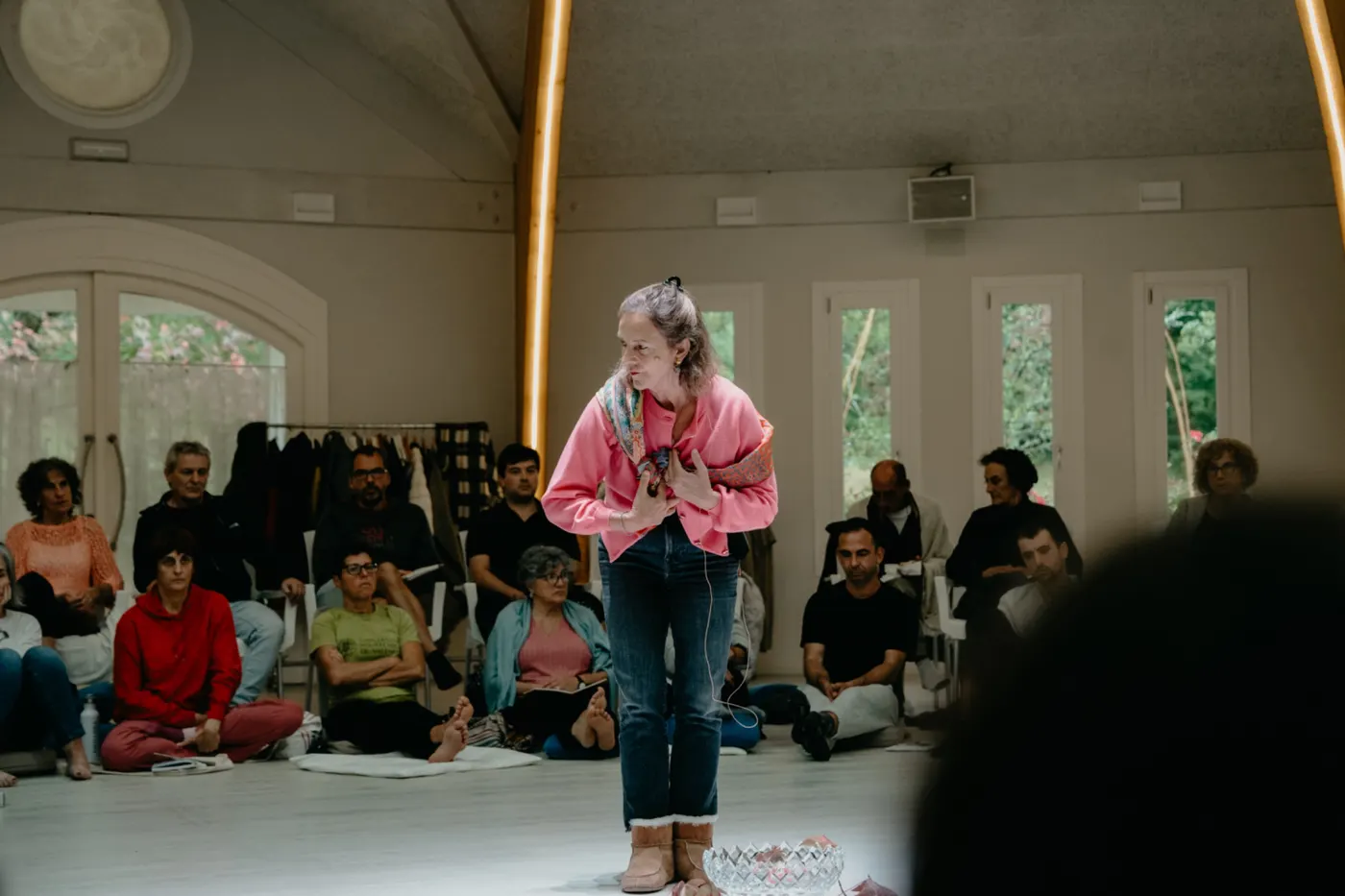
Last weekend I facilitated the autumn retreat at Amalurra, devoted to the archetype of the Master, with around 90 participants. This archetype invites us to cultivate wisdom through detachment and trust in the process. Each participant arrived with their own story and their own circumstances, yet I sensed an experience the group had in common: mental noise, that coming and going of thoughts that becomes entangled with the noise of the world and makes it hard for us to recognise what is happening within us.
When I opened the retreat, I spoke about the need to let that noise settle so that we could perceive what is, which is always present even when our interpretations, worries and expectations cover it over. Saturday’s drizzle supported that work: the autumn atmosphere invited us to turn inwards and helped us slow down, while the falling leaves offered an image of what I proposed we explore during those days: the possibility of letting go of what we are still holding on to.
To do this, I suggested being present “from the neck down”, bringing our attention to our own body and to what was happening in it, both when sharing and when listening to others. A tension, a gesture or an emotion could help us recognise something we did not yet know how to put into words. My work was to accompany that listening and to give space to whatever was emerging, so that each participant could come closer to their experience without rushing to explain it or resolve it.
Confusion is one of the shadows of the Master, and mental noise is one way of recognising it. When we are caught up in it, we tend to go round and round what is happening to us and so remain trapped in the same questions and patterns. We often try to find security by controlling what happens, defending our position or judging, without noticing how these responses prevent us from understanding the situation better. That is why I invited the participants to observe these movements and to make room for silence, which allows us to wait when clarity has not yet come. In that pause we can cultivate discernment and recognise what we need to attend to, when it is time to act and when it is better to keep listening.
Over the course of the retreat, this work took shape in an image shared in the circle: like trees in autumn, we let our leaves fall, but there is one we keep in the back pocket of our trousers. That leaf represents an attachment we are still holding on to, even after letting go of others, without recognising how much it shapes our life. When we look at it closely, we discover that other, smaller attachments are bound up with it, represented in the image by the little leaves that came with the one we had kept.
That leaf brings us closer to a pain we have learnt to protect ourselves from, and that is why we have a thousand reasons to keep it and spend so much energy holding on to it. This attachment can show itself in the need to be right, to control an outcome, to receive a recognition we are still waiting for, or to maintain an image of ourselves through which we feel we have a place. When these expectations are not met, resentment tends to appear towards those we believe have not given us what we needed or hoped for. Understanding what this attachment protects helps us approach with more care what makes it hard for us to let it go, and the pain we fear feeling if we do.
As the noise began to subside, I accompanied the participants in recognising their leaf and in observing how it was present in different areas of their lives. Understanding this connection helps to bring order to our experience and to see what we defend, what we expect from others and what leads us to repeat certain responses. That clarity can bring a calm from which it becomes easier to recognise what we need to pay attention to and to begin taking responsibility for how we act.
The Master teaches us that detachment opens the path to wisdom. Practising it means letting go of expectations, cultivating flexibility and trusting the process. Trust, one of the qualities of this archetype, allows us to care for what we value and do what is within our reach, even when we do not know what the outcome will be. From that trust we can move through uncertainty and listen to what each experience shows us, even when it calls our plans into question or asks us to change direction.
This learning was also present when we explored the theme of death, which arose through experiences of loss, the illness of loved ones and the difficulty of accepting that someone we love may leave. Drawing on what the participants shared, I suggested observing how the fear of losing these people influences the way we accompany them. Giving space to sadness and acknowledging what we need helps us distinguish it from what the other person is living through, and in this way we can be by their side with deeper listening and greater respect for their process.
Linked to this theme, I explored the death in life that occurs when we stop being ourselves in order to fit in. In that effort to adapt, we gradually lose touch with what we feel, desire or need, until we barely recognise what we have left out. The work allowed us to observe the most common strategies we develop to find acceptance, and how some of them were still at work even when they limited our capacity to express ourselves and relate to others. Such disconnection leads us to cling even more tightly to recognition, to our relationships or to the place we occupy, hoping to find in them the security and worth we struggle to give ourselves.
Letting go of these strategies is often experienced as a threat, because we have built part of our identity around what we do, what is expected of us or how others see us. If we stop responding in the familiar way, we may not yet know how to respond differently. Trust helps us to remain in uncertainty, to reconnect with our most vulnerable parts and to explore other responses without demanding of ourselves that we have already worked out what is to come.
In this work I place particular importance on looking with love at the parts of ourselves that have learnt to protect us, even when that protection ends up limiting our life impulse. Welcoming them means bringing them home consciously, recognising the role they have played and giving them their place. From that gaze we can approach the wound they protect and the pain we have avoided feeling, while observing how they still act today and what effects they have on our lives and our relationships. Understanding what these parts are trying to protect and how they still act today allows us to begin responding with more awareness and to recover qualities that had been limited by the need to defend ourselves. In this way we can journey from a broken heart to an open heart, with a greater capacity to feel and to relate. That openness brings us closer to unconditional love, which leads us to embrace all our parts without demanding that they be different in order to love them, while also taking responsibility for what we have destroyed by acting from them in our unconsciousness.
All of this unfolded through the group. As one person shared their experience and expressed what was alive in them, the others could enter those same territories within themselves and recognise aspects of their own that perhaps they had not yet been able to look at. The listening and presence of the circle held a process that also reached those who remained silent. For me, this is precisely where the meaning of field work lies: the experience of each person can help us attend to something that is also present in the whole.
And that whole also includes our ancestors, whom this archetype invites us to honour. Just as we inherit their gifts and qualities, we also receive negative patterns that we maintain out of loyalties that are often unconscious. These loyalties lead us to repeat ways of living and relating that block the expression of our soul. Recognising them and letting them go allows us to give more room to the gifts we have received and to unfold our own potential, with love and respect for those who came before us.
For that potential to find expression, we need to keep attending in daily life to what we recognised during the retreat. That is why, at the close, I proposed seated meditation, one of the Master’s tools, as a practice for cultivating silence, listening to the body and observing our thoughts and reactions. This attention helps us recognise how habitual patterns resurface and to pause so that we can respond with greater awareness, giving continuity to what we have begun to transform.
For me, the most meaningful part of this retreat has been the willingness of those who allowed themselves to look at the leaf they were still keeping and to come closer to the pain they had tried to protect themselves from. Recognising that attachment is a beginning. Learning to let it go requires us to keep attending to what has been discovered, with patience and trust, especially when the habitual responses reappear. It is in this everyday work, as we understand what is happening to us and take on our part in it, that experience can gradually become wisdom.
Over the course of this term I will continue to explore the themes that emerge as we unfold the archetype of the Master and integrate its teachings into our daily lives.

Irene GoikoleaDoctor in depth psychology, integral coach and founder of the Amalurra Project. More about Irene


